


I’ve avoided blogging about anything political recently because the situation in the United States is so volatile these days. However, the recent shooting of Charlie Kirk is one more act of gun violence in a long list. Let me add this disclaimer right off the bat. Until Wednesday, September 10, I had no idea who Charlie Kirk was. I subsequently read a bit about him and things he’s said regarding gun rights and other things.

While I don’t agree with things he said or the confrontational manner in which he said them, he did not deserve the public assassination he got. (“I think it’s worth it to have a cost of, unfortunately, some gun deaths every single year so that we can have the second amendment to protect our other God-given rights. That is a prudent deal. It is rational”. Event organized by TPUSA Faith, the religious arm of Kirk’s conservative group Turning Point USA, on 5 April 2023)
The fact that his wife and children were in the audience when it happened is appalling. But, this is not the first political assassination in history. Nor is it the first political assassination in American history. Let’s go back to one of the earliest examples of political murder.
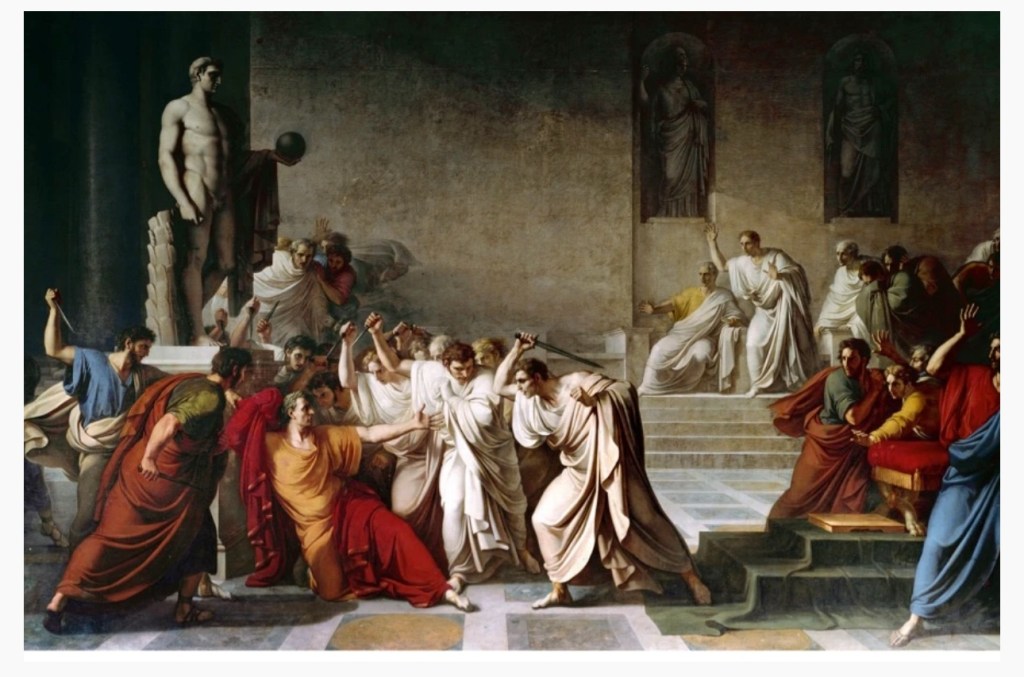
On March 15th, 44 BCE, the assassination of Julius Caesar took place during a senate session at the Curia of Pompey in Rome. While little is known of the sixty to seventy attackers, they were led by a group of senators. Marcus Junius Brutus, Gaius Cassius Longinus, and Decimus Junius Brutus Albinus reportedly stabbed Caesar approximately twenty-three times. Believing that Caesar threatened the Republican values and traditions of the time, the senators justified their actions as pre-emptive, a way to prevent Caesar from achieving perpetual dictatorship. This wasn’t a spur of the moment act. In February of 44BCE Cassius Longinus and his brother-in-law, Marcus Brutus, decided Caesar had to be prevented from becoming king. Brutus is believed to have thought if the plan was going to be effective it needed to be done in a group. This would make the attack more palatable to citizens, the rightful removal of a tyrant in order to preserve the Republic. Many paintings have been created showing the assassination, Shakespeare wrote a play commemorating the event, and films have been made depicting it. The result of the assassination of Julius Caesar on the Ides of March was what the assassins sought to avoid. It precipitated the fall of the Roman Empire. It’s worth reading about this event to fully understand these events. Amazon- https://a.co/d/41weG4H
Of course there were many more political assassinations in history. Ramesses III, Caligula, Marcus Aurelius Marius, Constantine III, Sushun, Emperor Yang of Sui, Edward the Martyr, Brian Boru, William II, Charles I, Henry VI, Giuliano de’ Medici, James III, Charles I (of England), Peter III, Abraham Lincoln, Alexander II, Umberto I, Carlos I, Francisco I. Madero, John F. Kennedy, Faisal I, Anwar Sadat, Yitzhak Rabin, Muammar Gaddafi. This is just a partial list. It does not include attempted assassinations.
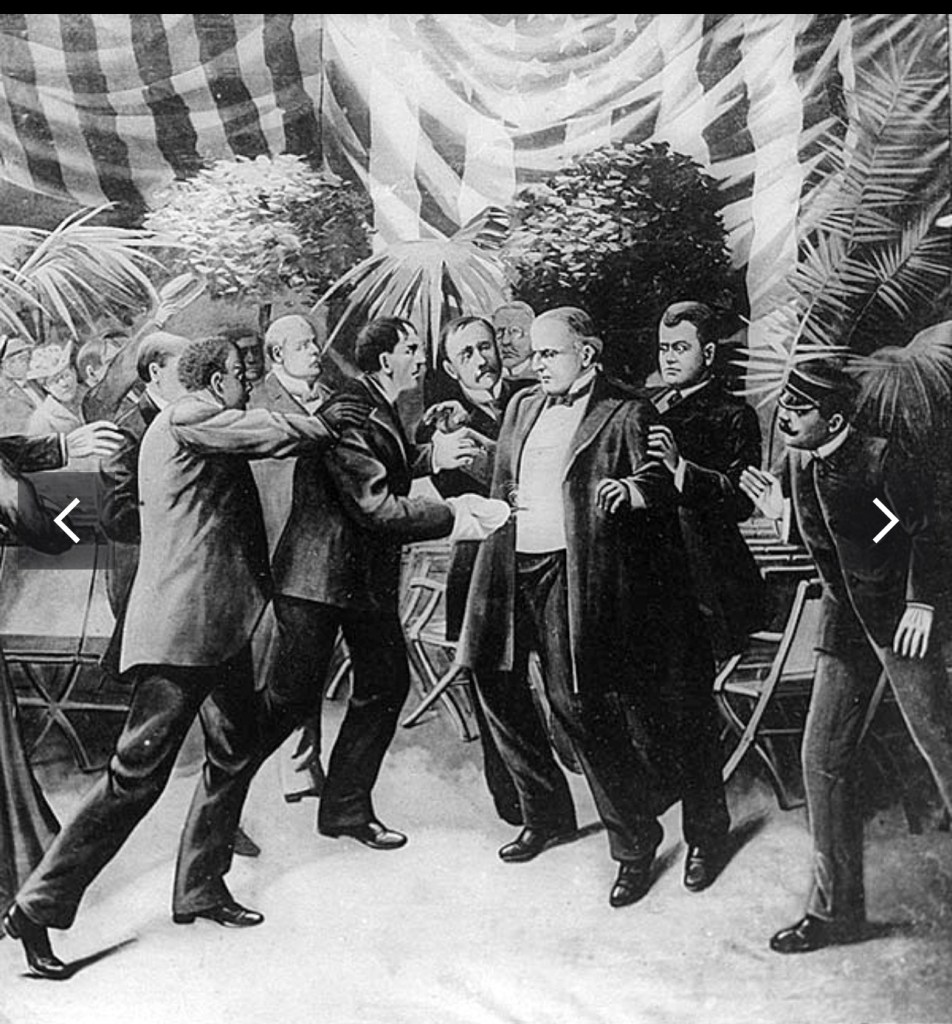
The United States of America has its own list of political assassinations and attempted assassinations. Abraham Lincoln (1865), James A. Garfield (1881), William McKinley (1901), and John F. Kennedy (1963). Ronald Reagan survived an assassination in 1981. These were all US Presidents. One of the most well known assassinations was a duel. Aaron Burr’s killing of Alexander Hamilton in 1804 was a shocker. Burr was US Vice President and Alexander Hamilton was the former first Secretary of the Treasury. The men had a long contentious relationship. So, we in the United States are not strangers to political differences erupting into violence. It would be nice to think we would have learned from the past. It would be nice to say the root of the problems are guns, mental illness, a lust for power, or a need to be recognized/remembered for something dramatic. Whatever the motivation, they have invaded the lives of the populace with extremism. Usually their actions accomplish the opposite of what they hope. Will assassinations continue into the future? More than likely, yes. There will always be disgruntled individuals, moved by the actions of a political leader, who seem to believe they can change the world with a bullet, a knife, or some deadly weapon.
Is there a solution to these killings that strike at the hearts of populations in flux? I don’t have an answer. We can suggest open dialogue, not casting aspersions on opposing sides, promoting your beliefs without rancor. Somehow, despite some efforts in that direction, we too often find countries cast into internal battles that only escalate violence. Sorry, but thoughts and prayers won’t cut it. Time for some positive action!

 Between the Beats