

These tarantulas may have evolved huge genitalia to fend off bloodthirsty females
Chrissie Paintings
https://www.nationalgeographic.com/animals/article/new-tarantula-genus-enormous-genital-legs-cannibalism. Annie Roth
Researchers have uncovered a new tarantula genus called Satyrex where males may have evolved longer sex organs to avoid getting eaten by fierce females. A female from the species Satyrex ferox is pictured below.
Imagine a group of scientists sitting around studying spiders. Suddenly, one scientist leans forward, magnifying glass in hand, and exclaims, “Look at the jobbers on this baby!”
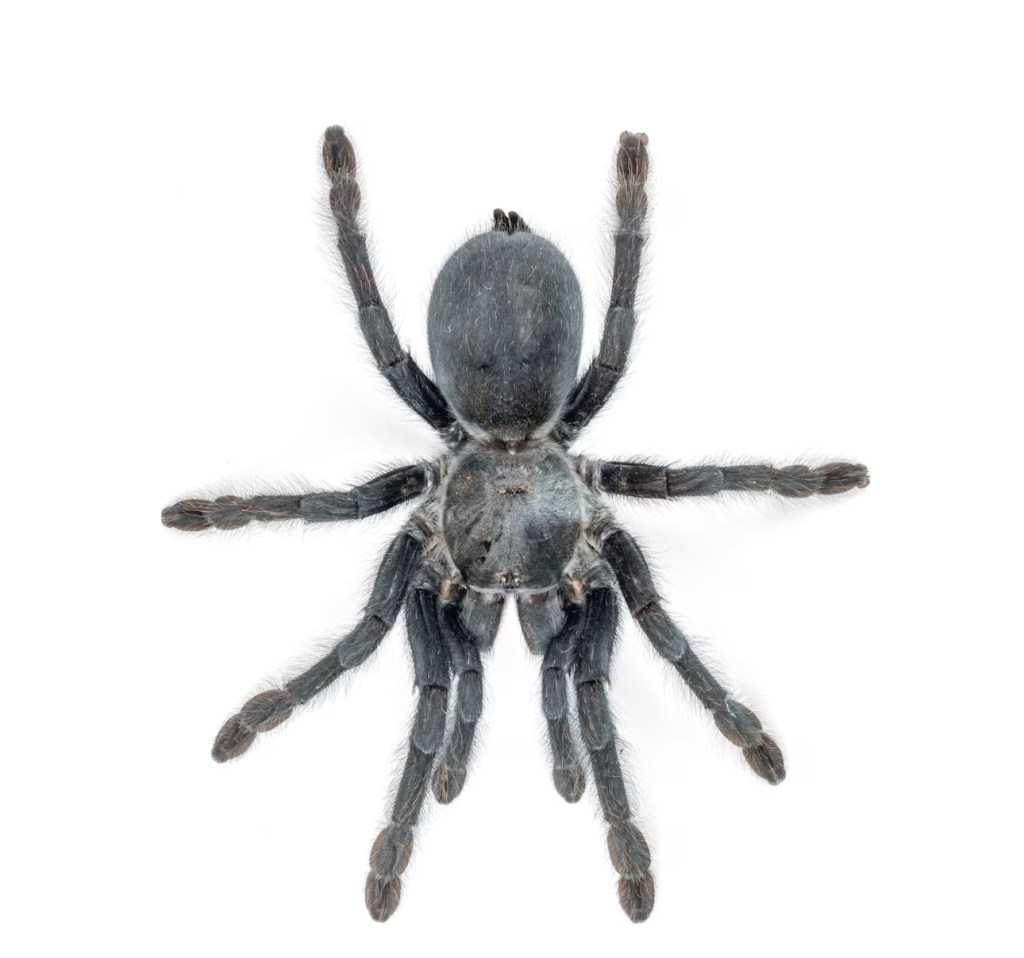
Researchers have uncovered a new tarantula genus called Satyrex where males may have evolved longer sex organs to avoid getting eaten by fierce females. A female from the species Satyrex ferox is pictured above.
In a recent study published in the journal ZooKeys, a new species of spider has been identified. This genus has been creatively named Satyrex, basically King Satyr, Named for the Greek mythological creature, the Satyr, half-goat, half-man, and well endowed. Translation, they have large palpi. No, tarantulas do not have penises. Instead they use palps for mating and eating.
An arachnologist from the University of Turku in Finland, Alireza Zamini, says “New species are found quite regularly, but finding large-sized spiders with such bold behavior and such unique features, that doesn’t happen every day.”
The palps are located near the spider’s mouth. They look like legs with bulbs called palpal bulbs that are like syringes. When the males start feeling frisky they choose one of their webs and drop some of their sperm on it. Then they pick it up with their palpal bulbs. Spying a desirable female spider, they grab hold of her, insert a sperm coated pedipalp into her genital opening ( a hardened plate called an epigyne) and make a deposit.
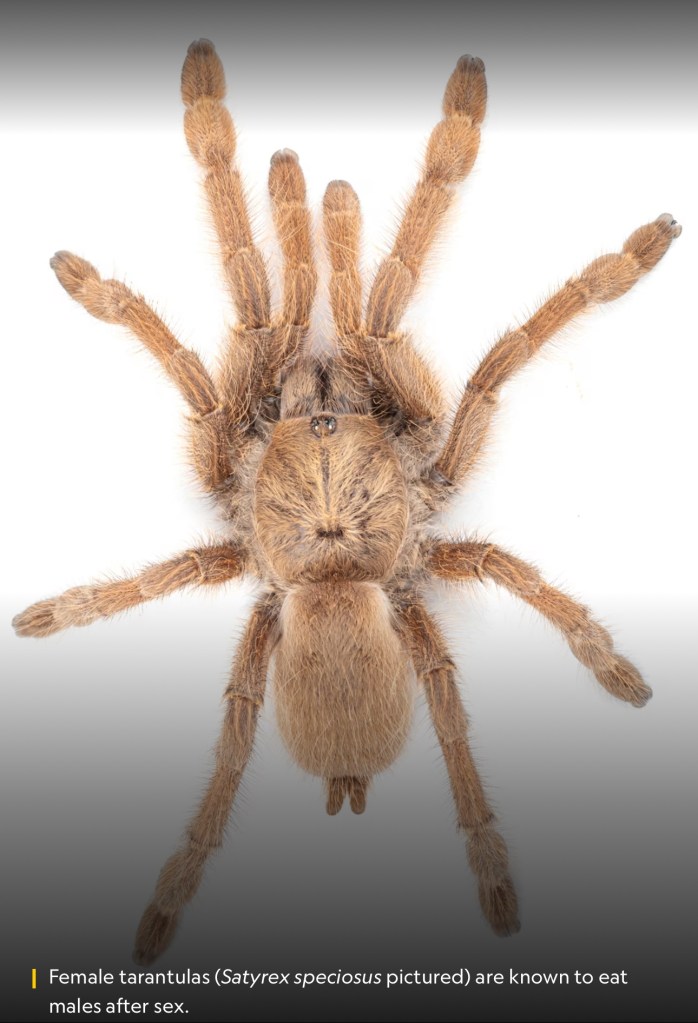
Last year social media sites and a citizen science platform, iNaturalist, began running reports on tarantulas with enormous sex organs on the Arabian peninsula and the Horn of Africa. Naturally this intrigued Zamani and his colleagues. The scientist managed to acquire eight preserved specimens, along with photographs and videos of the spiders in the wild.
Upon examining the DNA and physical structure of the specimens, the scientists concluded these spiders not only belonged to four new species, but also formed an entirely new genus. Named Satyrex, they live underground and Zamani states they are “highly defensive and highly aggressive.” Zamani and the other scientists wonder how these unusual spiders have remained unknown for such a long time.
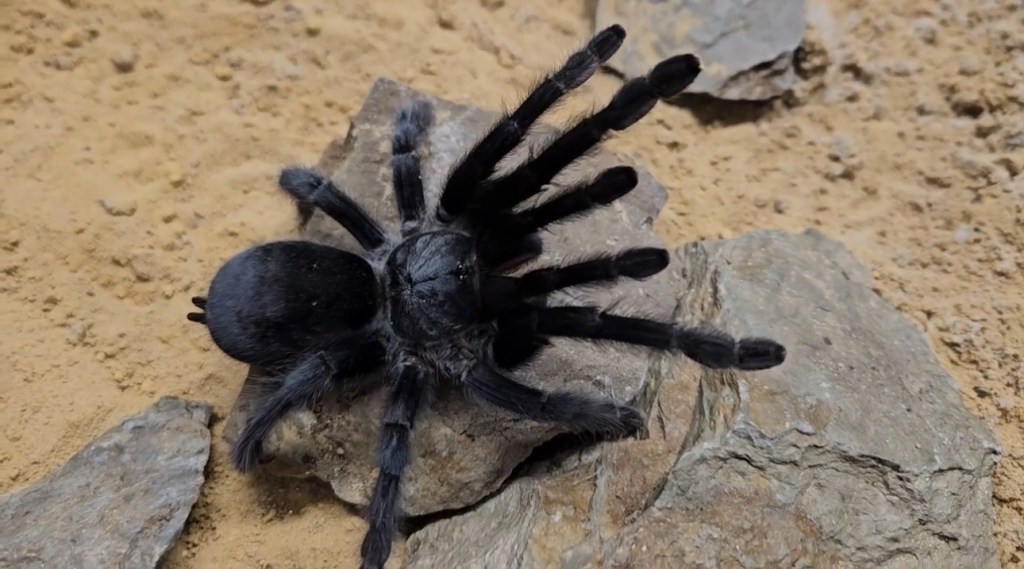
The most aggressive of the genus is the Satyrex ferox. Ferox is the Latin word for fierce. The palps can be almost two inches long which is close to the length of its longest legs. Ouch! If anything or anyone disturbs these sexy spiders they raise their front legs and rub them together to make a hissing sound in defense.
So, what has caused these spiders to evolve into sexual giants? The scientists think their development may be their defense against female spiders who attack and devour the males during sex. All male spiders have developed hooks on their front legs to keep the females from biting them while they mate. The hooks prevent the female spiders fangs from locking onto a male part. By themselves these hooks may not be completely effective, but the length of the palps of the Satyrex could give them the advantage of further distance from the fangs of their violent mates.
Behavioral ecologist, Chrissie Painting, believes the spiders may be undergoing an “evolutionary arms race”. The females are more aggressive in order to dominate and feed on the males. They need the nourishment while their offspring are waiting to appear. Since the males still have that old sex drive, they develop a method to defend themselves against becoming a midnight snack. According to Painting, “sexual cannibalism is a strong driver of evolution.”
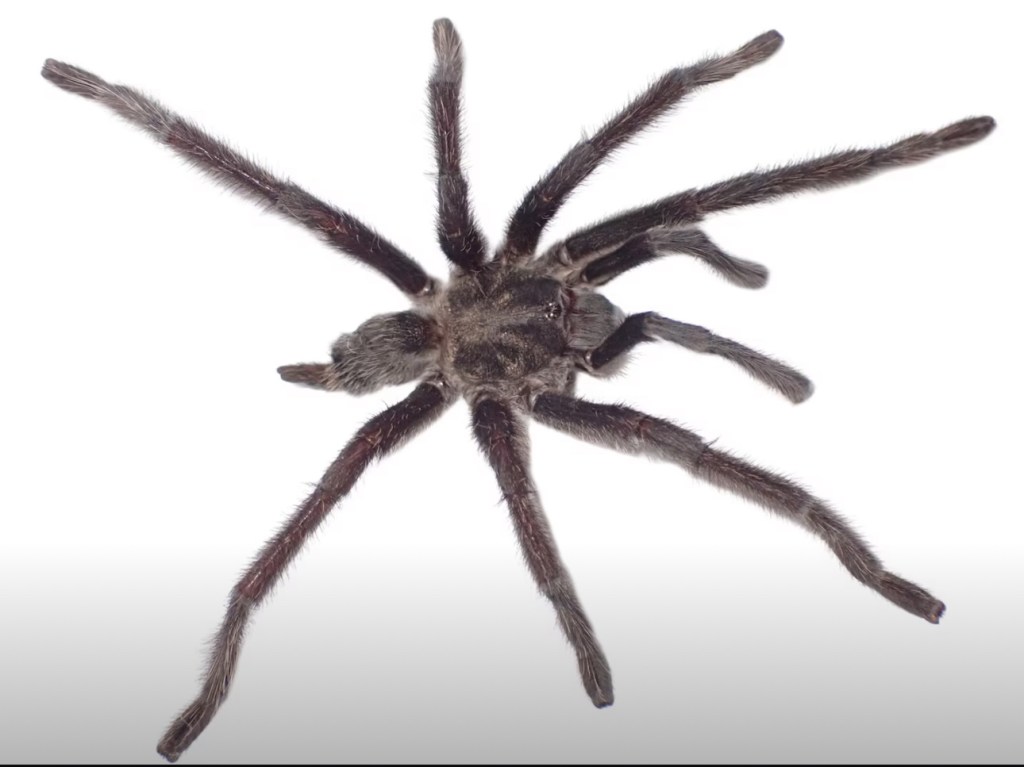
Having longer leg-like genitals may help male Satyrex tarantulas (Satyrex arabicus shown) keep a safe distance from feisty females during sex.
PHOTOGRAPH BY IBRAHIM MOHSSIN FAGEEH
Male Spider Genitalia:
- Pedipalps:These are leg-like appendages located near the spider’s head. In mature males, the tips of the pedipalps are modified into complex structures called palpal bulbs, which are used to store and transfer sperm.
- Palpal Bulbs:These structures contain a coiled tube or duct where sperm is stored. The bulb itself is located at the end of the pedipalp and has a small opening near the tip.
- Sperm Web:Male spiders produce a small web and deposit sperm onto it. They then use their pedipalps to suck up the sperm, effectively charging them with sperm for mating.
Female Spider Genitalia:
- Epigyne: This is a hardened plate on the underside of the female’s abdomen, located near the epigastric furrow. It contains the genital opening.
- Spermathecae: These are pouches or sacs within the female’s body where sperm is stored after mating.
- Oviduct: This is the tube through which eggs pass during fertilization.
- Mating Process:
- He then uses his pedipalps to suck up the sperm.
- The male spider deposits sperm onto a small web.
- During mating, the male inserts one or both pedipalps into the female’s epigyne.
- Sperm is transferred to the female’s spermathecae, where it is stored until fertilization.
https://www.popsci.com/environment/tarantula-genitals-satyrex/

 Between the Beats